
Inspection first, then treatment
We look for the source, entry points, harborage areas, moisture conditions, and activity patterns before we apply products. A good plan starts with what is actually happening on your property.
Serving Denton, Texas & surrounding areas
Mon–Fri 8am–6pm · Sat 9am–2pm
Get straightforward answers, clear service standards, and a team that treats your home like it matters. Based in Denton (76204), we focus on practical pest control that starts with inspection and ends with a plan you can follow.
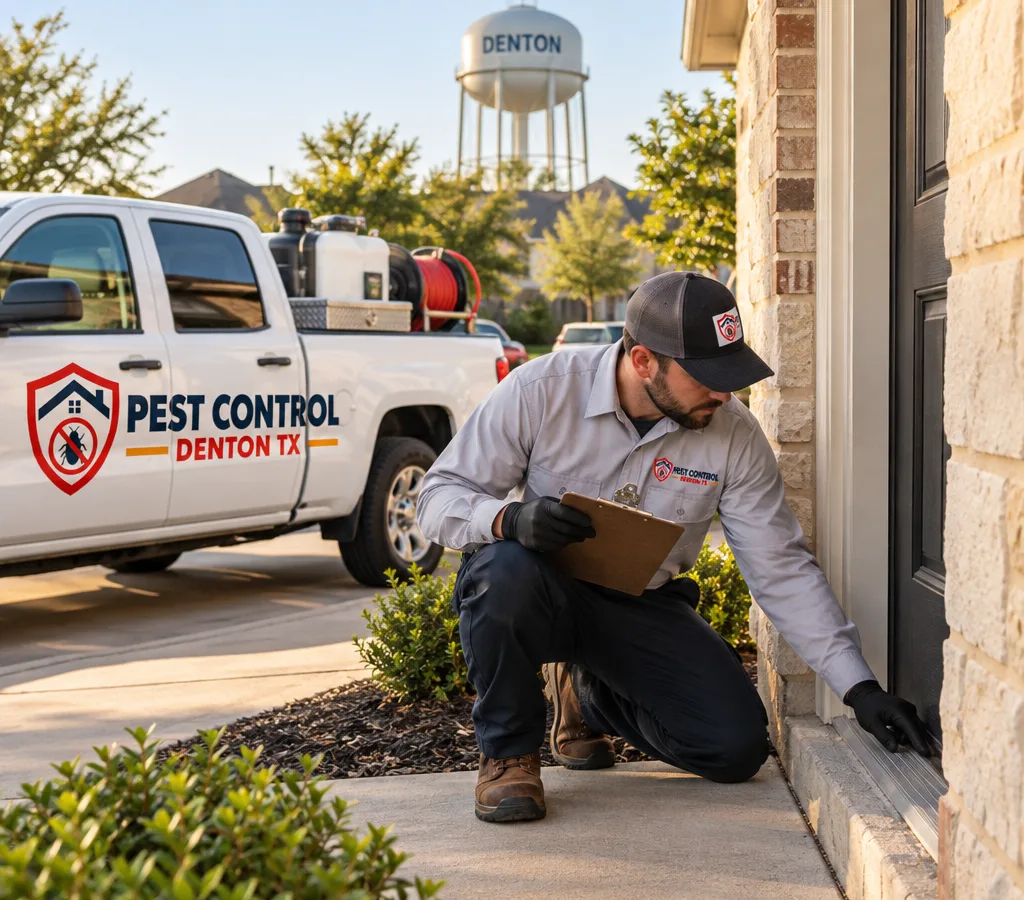
Most people are not looking for a biography. They want to know what kind of company they are letting onto their property, how problems get solved, and what the experience will feel like.
At pest control denton tx, we keep it simple: we show up prepared, we start with an inspection—not a sales pitch—we explain what we find in plain language, and we build a treatment plan around the pest pressure and the structure. If the situation calls for follow-ups, monitoring, or exclusion work, we say that up front so you can make a decision with confidence.
Because we are local to Denton, we are used to the mix of single-family neighborhoods and student housing near the University of North Texas and Texas Woman’s University. Those properties have different pressure points, and our approach changes with the building and its occupants—not just the pest name on the work order.
We look for the source, entry points, harborage areas, moisture conditions, and activity patterns before we apply products. A good plan starts with what is actually happening on your property.
You get a written scope that matches the situation: where we treated, what we used, what we observed, and what you should do next—whether that involves sanitation, storage, repairs, or monitoring.
We prioritize crack-and-crevice work, baits, and directed perimeter treatment where appropriate, with attention to label requirements and indoor safety.
We point out the fixes that make the biggest difference: sealing gaps, door sweeps, screens, storage changes, and reducing food and water sources that keep pests coming back.
We communicate arrival windows, protect surfaces, and keep work areas tidy. If something changes on-site, you hear about it before we change the plan.
Our methods follow standard, industry-proven pest management practices: identify the pest and conditions, reduce access and food sources, then use the least disruptive treatment that fits the job.
In practical terms, that usually means:
Denton has a wide range of property layouts, from older homes closer to downtown to newer builds on the outskirts. Construction details change where pests enter and nest, so we adjust the approach to the structure instead of forcing the same routine on every address.
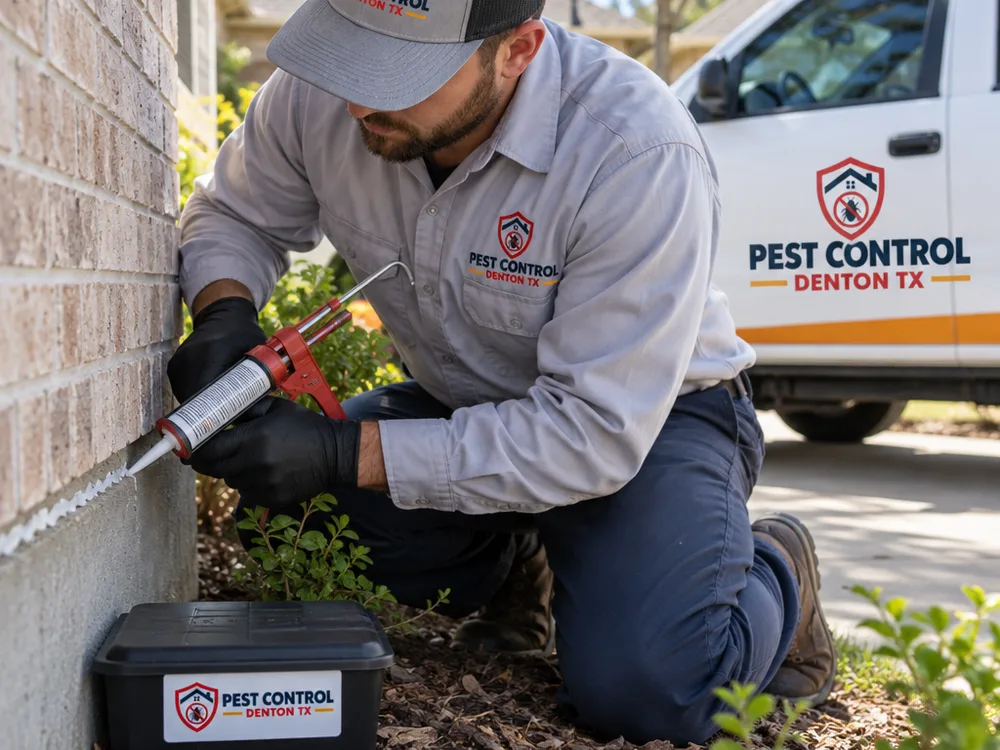
We start by learning what you are seeing—where, how often, and when it started. If there are safety concerns or urgent activity, we prioritize that in the schedule and plan.
We check typical pressure points: exterior entry areas, plumbing penetrations, kitchen and bath edges, attic access when relevant, and any areas you have flagged.
You hear what we found, what it likely means, and what actions matter most. If prevention steps will lower the risk, we spell them out clearly.
We apply products according to the label and the plan: baits and crack-and-crevice work where pests travel, plus perimeter protection when appropriate.
If activity continues, we adjust placements, add monitoring, or recommend exclusion and repair priorities. Pest control is most effective when the plan evolves with what the evidence shows.
Trades work is personal because it happens where people live and sleep. Our team runs the business with a few non-negotiables.
If you are comparing local teams, start with the basics: How do they inspect? How do they explain the plan? What will you receive in writing? Those answers tell you a lot about what the service experience will be like.
If you also want a quick overview of our local coverage and how we handle ongoing pest management, our Pest Control in Denton Texas overview summarizes what to expect at a high level.
If the issue is likely coming from a door gap, a leaking supply line, or clutter that is feeding activity, we say so. If a treatment is not the right tool, we will not push it.
We use products as directed and keep application choices tied to the environment, including kids, pets, sensitive areas, and ventilation.
We treat what is active today and look for the condition that will trigger the next cycle. Reducing moisture or blocking an entry point often does more than another round of spray.
“They walked the whole perimeter and pointed out exactly where pests were getting in, then explained what they treated and what I should seal up. The written notes made it easy to follow through.”
“No pressure, just a clear plan. They focused on the areas that actually showed activity and didn't treat rooms that didn't need it.”
“I appreciated the detail. They explained why the issue was happening and what changes would prevent it from coming back.”
We serve Denton and nearby areas, with scheduling and treatment plans tailored to the property type, whether it is a single-family home, a rental, or a small commercial space. If you are near Denton, including ZIP 76204, and want to confirm availability for your address, reach out with the location and the pest issue you are seeing.
We offer both, and the right choice depends on the pest and the conditions at the property. One-time service can make sense for a clear, contained issue, while recurring service is often a better fit when pests are seasonal or when gaps, moisture, or neighboring activity make re-infestation more likely.
An initial inspection focuses on identifying the pest, locating activity and travel routes, and finding the conditions that support the problem, such as entry points and moisture. In most homes that includes exterior access areas, interior edges where pests move, and any specific rooms or spots you have noticed.
Treatments can be performed with kids and pets in mind, but safety depends on product selection, placement, and following label directions. We discuss household concerns before treatment and use targeted placements, such as crack-and-crevice work or tamper-resistant stations, when appropriate.
Scheduling depends on season and demand, but we aim to offer prompt appointments when pest activity is active and disruptive. The fastest way to get an accurate time window is to share the pest type, where it is happening, and whether it is indoors, outdoors, or both.
Most of the time, simple access makes the visit more productive: clear a path to areas where you have seen activity, move items away from baseboards in key spots, and note where and when you noticed pests. If specific preparation is needed, we will tell you ahead of time.
Tell us what you are seeing and where it is happening. We will explain what an inspection looks like, what a realistic plan involves, and what you can do right away to reduce pest activity.